A beloved pearl and a beautiful gown can each make a strong case for attention.
A pearl necklace that looks delicate in its box can seem surprisingly busy against a beaded bodice. Neckline, embellishment, and the scale of the pearls all change how a piece looks once the dress is on. With an ornate gown, simple pearl studs may leave its details room to shine; a plainer dress may make space for a strand or drop earrings.
A family necklace need not match every detail to feel right. If it matters to the bride, trying it on with the dress can reveal whether it needs a quieter pair of earrings—or no other jewelry at all.
Let one detail lead
A useful way to narrow the choices is to pick one focal point: the gown, necklace, or earrings. If lace or beading already draws the eye, small pearls can add polish without competing. A treasured necklace can take the lead, with simple studs beside it.
A plain gown leaves more room for a stronger jewelry choice. A pearl strand can frame an open neckline, while drop earrings draw attention toward the face when the hair is swept up. Both do not need to be bold for the look to feel finished.
Try the jewelry with the gown and take a photograph from a few steps back. That wider view makes it easier to see what catches the eye first. If several details compete, removing one piece may be enough.

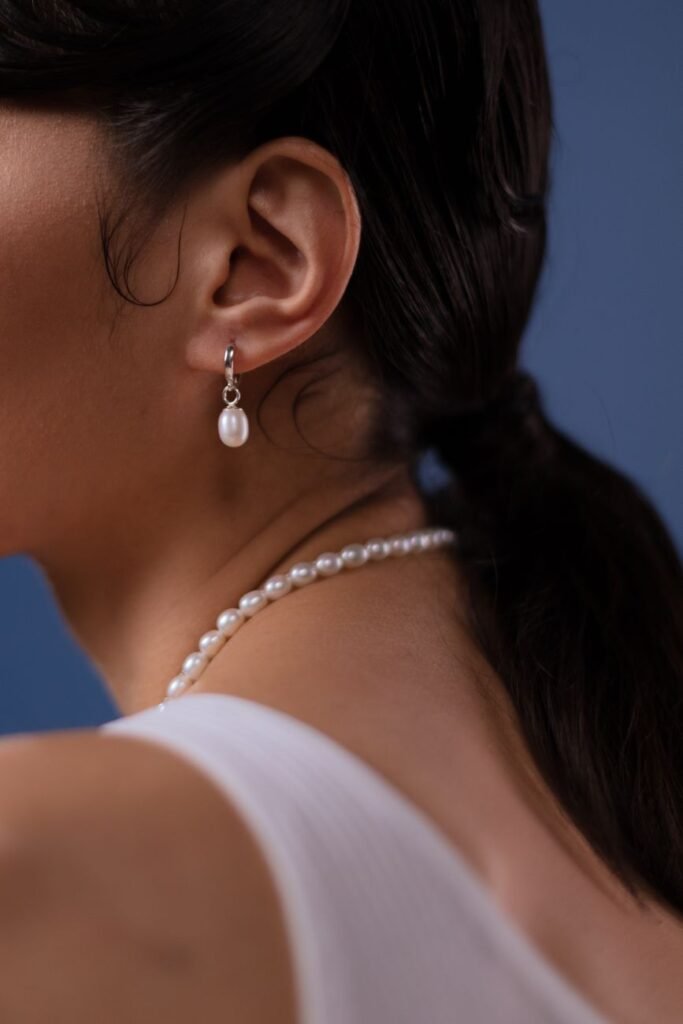
These 5.5 mm freshwater cultured button pearls sit close to the ear. They offer a small accent alongside an embellished gown or a prominent necklace.
The earrings have 925 sterling silver posts and 14K yellow gold plating. Their warm-toned setting can pair with gold details elsewhere in the outfit.
Let the neckline make room for pearls
The dress determines where pearl jewelry can be seen clearly. A sweetheart or V neckline leaves space for a short strand or pendant; the necklace looks most deliberate when it sits on bare skin rather than crossing the dress edge. Trying it on with the gown matters, since a necklace that looks right over a T-shirt may land awkwardly against a bodice.
A high neckline offers less room at the front. Pearl studs or drop earrings can frame the face without competing with lace, buttons, or a structured collar. If the dress has a plain, close-fitting neck, a necklace may still work, but its length should clear the fabric edge rather than repeatedly catching on it.
An off-shoulder dress needs a wider view than a close-up of the necklace. A short pearl strand can sit neatly in the open space, yet the full shoulder line may look crowded when it is paired with large earrings or prominent sleeves. A photo from the front, with arms resting naturally, makes the balance easier to judge.
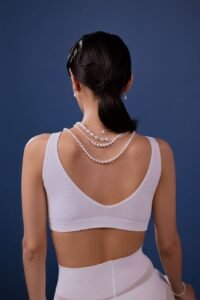
For a backless gown, a pearl back necklace can bring detail to the exposed back while leaving the front simple. Check where its drop ends against the lowest point of the opening, and try sitting and walking in it. Movement can shift a delicate chain or cause pearls to catch on the dress.
When the dress has its own details
A pearl does not need to match every bead on a gown. It can pick up one detail—a soft glow in the embroidery or a rounded shape in the beading—while leaving the dress room to stand on its own. The question is whether the jewelry gives the eye a place to rest or adds another pattern to take in.
With a heavily embellished bodice, plain pearl studs often read as a quiet finishing touch. A large pearl necklace beside dense beadwork may be harder to distinguish, especially where the two meet near the neckline. For a closer look at that balance, see how pearls work with a beaded gown.
A useful check is to view the full outfit from a few steps away, then look at a photo. If the pearls stand out before the dress and face, they have become a focal point; if the eye moves easily across the look, they are acting as a supporting detail. Lace, shimmer, and pearls can coexist—there is no need for each to compete.
Match pearls to the gown, not the label
A dress labeled ivory might look almost white, warm yellow, or somewhere between. Compare pearls with the actual fabric, ideally near the neckline, in daylight and under the venue’s lighting. A photograph can reveal a contrast that is hard to notice while holding the pieces separately.
White pearls can look lovely with ivory: their soft luster is less stark than a flat white accessory. The question is whether that contrast looks fresh beside the gown or makes its fabric appear unexpectedly yellow. For a closer look at that pairing, see how white pearls sit against ivory fabric.
Cream pearls can gently echo a warm dress, while blush adds a faint hint of color without dominating it. Neither needs to match the fabric exactly. Darker pearls create a more intentional contrast, especially near the face; wearing black pearls with a bridal look explores how that contrast can still feel cohesive.

This strand combines pearls, clear rhinestones, and gold-plated detailing. Its listing calls the pearls both cream and white, making a comparison with the gown especially useful.
The necklace is listed at about 14 inches, with a four-inch extender. That adjustment allows a neckline check before the bride settles on its placement.
Which pearl earrings work best?
Pearl studs keep the focus near the face without competing with a veil, hair ornament, or detailed neckline. They remain visible with an updo, though loose hair may cover them. A slightly larger pearl can help a stud show through softly styled hair.
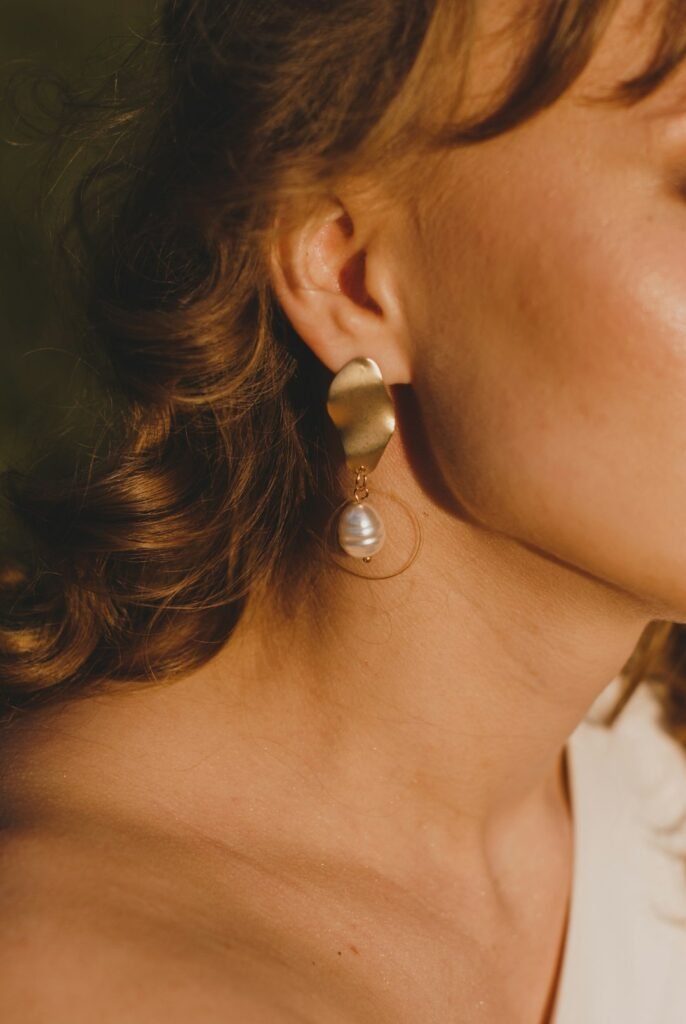
Short drops add movement and tend to remain visible beside loose curls. They can draw attention toward an open neckline without hanging low enough to catch on a collar. If the dress has a high or ornate neckline, a simple single-pearl drop usually leaves more breathing room than a clustered design.
Prominent earrings—long drops or larger pearl arrangements—show clearly with swept-back hair and a relatively plain neckline. Their size matters less than how they feel after several hours: a light pair that moves freely may be more comfortable than a heavy pair that pulls at the lobe. Trying earrings with the planned hairstyle can reveal both how they look and whether they snag.
For sensitive ears, post material deserves as much attention as the pearls. Titanium or solid-gold posts may suit some wearers better than plated metal, but no material is comfortable for everyone; testing a pair before the wedding is useful. For unpierced ears, clip-ons offer similar looks, though clasp pressure varies. A padded, adjustable clip worn for a trial period gives a better sense of all-day comfort than a quick mirror check.
Earrings, necklace, or both?
The choice depends on where the pearl detail looks best. Earrings remain visible beside a high or embroidered neckline; a necklace can bring focus to a clean, open one. Both can work together when their scale stays quiet, such as small studs with a strand or restrained drops with a fine chain.
A set need not be worn in full. Compare pearl size, color, and metal tone, then check whether one piece looks much heavier than the others. Bridal pearl sets worth comparing offer ready-made combinations, but the earrings and necklace should still be judged against the dress separately.
When the neckline looks complete on its own, a bracelet can carry the pearl detail instead. A small hair accent brings pearls near the face without adding another element at the collar. A front-facing photo helps reveal whether any piece draws more attention than intended.

This set includes a short pearl necklace, a bracelet, and pearl drop earrings. The listing gives the necklace a 14-inch chain with a 2-inch extender.
The necklace and bracelet both use 5 mm pearls, giving them a consistent scale. Either can be left off when the dress needs less jewelry.
Pearls with personal meaning
An inherited strand can be the main piece rather than the starting point for a full matching set. Simple contemporary earrings can give it space, while a family pearl pendant may feel more natural with a less formal dress. For a piece that seems hard to place, styling an heirloom without losing a personal look can begin with trying it against the gown rather than assuming it must be worn as it always has been.
The meaningful detail need not be prominent. A borrowed pearl bracelet or a small pendant worn close to the neck can carry a family connection without drawing attention from the dress. Checking an older clasp before the wedding is worthwhile, especially when the piece has spent years in a jewelry box.
Some families associate bridal pearls with tears, but the idea that pearls bring bad luck is a superstition, not a rule. A bride who loves the piece can wear it; one who finds the association unsettling can choose another way to honor its giver.
Give the pearls a dress rehearsal
The most useful jewelry check happens with the complete outfit: gown, veil or hair accessories, and the hairstyle planned for the day. A pearl drop that shows clearly beside loose hair may disappear beneath a fuller updo, while a necklace may sit differently once the dress is fastened. A few photos from the front, side, and back can reveal details that a mirror misses.
Take those photos in daylight and, if possible, under lighting similar to the venue’s. Pearls can look warmer, cooler, or more reflective on camera than they do in person; how wedding lighting affects pearl photos is worth considering before settling on a shade. A phone photo is not a perfect preview, but it can show whether the pearls remain visible without becoming the brightest part of every frame.
Then wear the pieces long enough to sit, turn, and walk. Check whether earrings catch in hair, a clasp slips, or a bracelet brushes delicate fabric. Bridesmaids’ jewelry can share the bride’s general scale or a similar setting without being identical; coordinating their pearls with the bride’s often looks more natural than an exact match.
Try the jewelry before final hair and dress adjustments are complete. If a piece needs constant straightening during a short fitting, it is unlikely to become less distracting over a full day.
-
Choose a focal piece
Decide whether earrings, a necklace, or another pearl detail will draw the eye first.
-
Check the dress
Look at the neckline and embellishment to see where jewelry has room without competing.
-
Compare pearl shades
Hold the pieces beside the gown fabric in person; white, cream, and blush can look different against it.
-
Try everything together
Wear the dress, jewelry, and planned hairstyle at once, then check the look in photos and while moving.
The finished look might need one standout pearl piece or a few quiet accents. A matching set is an option, not a requirement.