 From Northern Thailand to Global Jewelry Artisan
 From Northern Thailand to Global Jewelry Artisan
A seven-year-old girl stands mesmerized in the mountains of northern Thailand, captivating by the sight of another child adorned in traditional silver jewelry. Silver coins frame the young hill tribe girl’s face, while colorful beads complement her ethnic costume.
This moment would spark a lifelong passion.
The observer was Matta Nandrakwang, born and raised in Chiang Rai, Thailand’s northernmost province bordering Myanmar. Her childhood fascination with hill tribe jewelry would eventually transform from innocent admiration into a professional calling that bridges ancient traditions with contemporary artistry.
Early Life in Chiang Rai’s Gemstone-Rich Region
Chiang Rai provided the perfect backdrop for developing an appreciation of precious stones and traditional craftsmanship. The province’s natural beauty extends far beyond its landscapes, encompassing rich cultural diversity and numerous ancient ethnic tribes.
The region’s abundance of gemstones made trading the primary economic activity. Young Matta found herself surrounded by the glittering world of precious stones from an early age.
“Since the area is rich with gems and the main activity was their trade, I began to learn and develop a passion for the various gemstones,” Nandrakwang recalls.
The Transformative Encounter with Hill Tribe Jewelry
The defining moment came during that childhood encounter with traditional hill tribe jewelry. The intricate silver work and vibrant beads worn by her seven-year-old peer left an indelible impression on young Matta.
“I couldn’t take my eyes off her!” she remembers.
The impact was immediate and profound. Though she cannot recall her exact words to her father about the beautifully adorned girl, she vividly remembers the result. Her first piece of fine jewelry followed shortly after – a gold ring featuring a small blue star sapphire.
“I felt I was on top of the world,” she says of that first precious acquisition.
A Childhood Passion Ignites
That initial experience with gemstone jewelry ignited something deeper. The young girl who had been enchanted by traditional hill tribe adornments began developing her own relationship with precious accessories.
Regular exposure to people wearing jewelry normalized and reinforced her growing interest. The cultural significance of personal adornment in her community provided constant inspiration and learning opportunities.
Her passion would remain dormant for years but never disappeared entirely.
Educational Journey and Career Transition
Following conventional expectations, Nandrakwang pursued higher education in Bangkok during her college years. She chose nursing, a profession focused on helping others and providing valuable service to her community.
After graduation, she worked for four years in a public hospital. While she found satisfaction in helping people, something felt incomplete about her chosen path.
“I realized that although I liked helping people, I could not see myself being a nurse for the rest of my life,” she reflects.
From Nursing to Following Her Dreams
The realization that nursing might not be her lifelong calling prompted a significant life decision. Rather than immediately switching careers, Nandrakwang chose to step back and gain perspective through travel.
She left Thailand to spend two years exploring the world. This extended journey provided the clarity she needed about her true calling.
The conclusion was unmistakable. “What I really wanted to do, was to work with gems.”
Two Years of Global Discovery
During her travels, Nandrakwang’s natural inclination toward jewelry became even more apparent to those around her. Her consistent wearing of beautiful accessories prompted frequent questions from Westerners.
“People would ask, ‘are you going to a party?’ because I was always wearing jewelry,” she recalls with amusement.
The questions highlighted what had always been true about her character. “I love wearing nice things – I always have.”
These interactions reinforced her understanding that jewelry represented more than mere decoration. It was a form of personal expression and cultural connection that transcended geographical boundaries.
Professional Training in Gemology
Returning from her travels with newfound clarity, Nandrakwang recognized the importance of formal education in her chosen field. Her shared passion with her sister had led to countless hours spent in jewelry shops, examining pieces within their budget and admiring more expensive items.
“I realized I had much to learn about gems and jewelry, and decided to enroll in gemology school,” she explains.
The formal education provided comprehensive knowledge about both gemstones and jewelry construction techniques. This foundation would prove essential for her future work as both creator and educator.
Mastering the Art of Bead-Making
While gemology school provided crucial foundational knowledge, Nandrakwang’s journey into specialized techniques required additional self-directed learning. She independently studied bead-making, developing skills that would become central to her artistic practice.
The passion for this particular craft has endured through many years of practice and refinement.
Bead-making connects directly to the traditional hill tribe jewelry that first captured her imagination as a child. The circular journey from childhood fascination to professional expertise demonstrates the power of authentic passion.
Building a Personal Studio and Teaching Others
Professional development and personal fulfillment converged when Nandrakwang established her own studio space. This physical location represents the culmination of her journey from nursing student to gemology expert.
The studio serves dual purposes as both creative workspace and educational environment.
“I derive great joy from sharing my enthusiasm and knowledge of gems and jewelry with my visitors,” she says.
Teaching others allows her to multiply the impact of her knowledge while preserving traditional techniques for future generations. Her visitors benefit from both her formal gemological training and her deep cultural understanding of traditional jewelry practices.
The Cultural Significance of Hill Tribe Jewelry Traditions
Traditional hill tribe jewelry represents far more than personal adornment. These pieces carry cultural meaning, historical significance, and artistic traditions passed down through generations.
The silver coins, ornaments, and beads that first fascinated young Nandrakwang serve specific cultural functions within hill tribe communities. They indicate social status, tribal affiliation, and personal milestones while providing portable wealth and spiritual protection.
Understanding these deeper meanings enriches contemporary appreciation of traditional techniques and designs.
Preserving Ancient Craftsmanship in Modern Times
Nandrakwang’s work bridges the gap between ancient traditions and contemporary applications. Her formal gemological education combined with cultural understanding allows her to honor traditional techniques while making them accessible to modern audiences.
Through her studio and teaching, she ensures that knowledge of traditional bead-making and jewelry construction continues beyond its original cultural context. This preservation work maintains cultural connections while allowing traditions to evolve and adapt.
Her journey from nursing to gemology demonstrates how authentic passion can guide career transitions at any stage of life. The seven-year-old girl mesmerized by hill tribe jewelry grew into an adult who found her true calling.
Today, Nandrakwang continues sharing her knowledge and enthusiasm with visitors to her studio, ensuring that the beauty and cultural significance of traditional jewelry traditions will inspire future generations just as they inspired her decades ago in the mountains of northern Thailand.
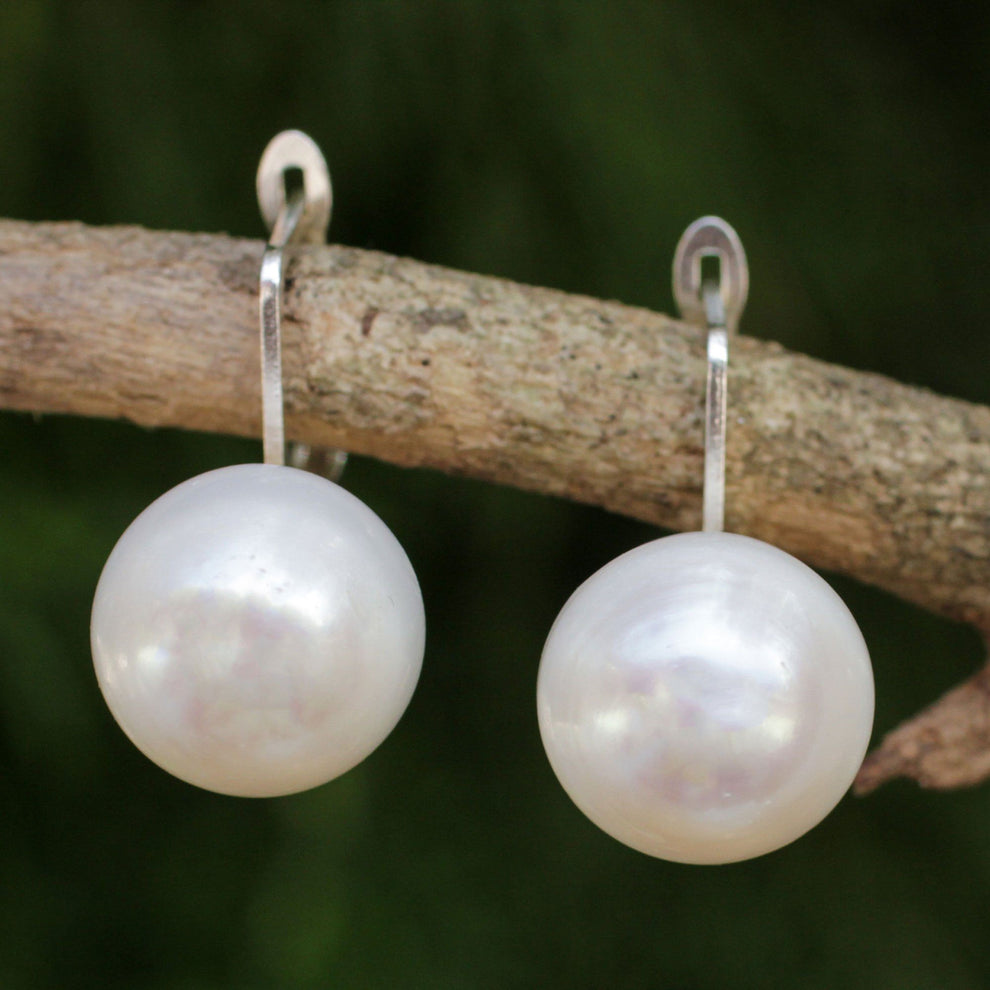
White Pearl Drop Earrings
- Pearl: Cultured freshwater
- Metal: Sterling silver
- Finish: Matte
- Artisan: Matta