Introduction: Blue Pearls, Big Claims, Thin Evidence


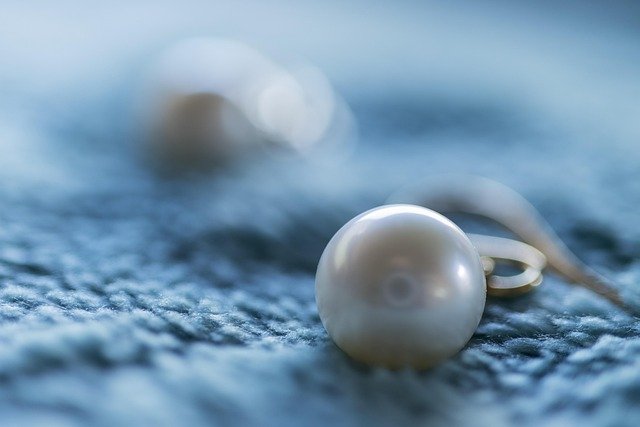
Blue pearls are sold with a familiar promise: beauty that doubles as healing. The language is soft, reassuring, and hard to disprove because it rarely commits to anything measurable. You are told they “promote wisdom,” “balance emotions,” and even “support fertility.” Then, almost as an afterthought, comes the disclaimer: there’s no scientific evidence, and you should not replace medical care. That contradiction is not a minor footnote. It is the whole story.
A blue pearl can be a meaningful object. It can also be a product wrapped in wellness vocabulary that slides conveniently between poetry and pseudo-treatment. The difference matters, because consumers deserve clarity: what is symbolic practice, what is personal belief, and what is a health claim wearing perfume.
What Blue Pearls Actually Are and Why the Color Matters
A pearl is formed when a mollusk coats an irritant with nacre over time. That part is concrete. The “blue” part is more slippery: some pearls appear naturally bluish due to the structure of nacre and light interference, while others are treated or dyed. In markets that sell “healing stones,” the origin story often gets blurred. “Natural,” “rare,” and “energetic” begin to sound interchangeable.
Color, however, does influence people. Blue is widely associated with calm, trust, and steadiness. That association is psychological and cultural, not mystical. If someone feels soothed while holding a blue pearl, that experience is real. The mechanism is not supernatural; it is human perception responding to color, texture, and ritual.
Small object. Big projection.
Where Healing Claims Come From: Tradition, Marketing, and Anecdote
Most gemstone healing claims survive on three pillars: inherited tradition, modern marketing, and anecdote. Tradition can be meaningful without being medically correct. Marketing can be persuasive without being honest. Anecdote can be sincere without being reliable.
Many websites’ content is unusually candid in one respect: it admits there is no scientific evidence. That honesty should not be minimized. Yet the list of benefits that follows is extensive and sweeping, the kind of catalog that fits neatly into product pages and social posts.
This is how the pattern works: an object is assigned virtues (truth, integrity, transformation), then feelings (tranquility, compassion), then cognitive advantages (focus, decision-making), and finally bodily effects (hormones, digestion, fertility). The more categories, the more universal the pitch. If a claim can apply to everyone, it can be sold to anyone.
Spiritual Benefits Attributed to Blue Pearls
Inner wisdom and authenticity
Blue pearls are said to promote “inner wisdom” and help people find their “authentic selves.” These are attractive ideas because they are hard to define and harder to falsify. What would it mean to measure authenticity on a Tuesday afternoon? Still, the language lands because many people want permission to slow down, listen inward, and make choices that feel less performative.
A pearl can function as a reminder. A reminder is not a cure. When the stone becomes a cue for journaling, meditation, or honest conversation, the benefit comes from the practice, not the mineral.
Truth, sincerity, and protection narratives
Blue pearls are also linked with truth, sincerity, integrity, and loyalty, plus “protection from negative influences.” This is classic symbolic merchandising: the stone becomes a moral badge and a shield.
Protection narratives thrive when life feels unstable. “Negative influences” can mean anything—gossip, envy, bad luck, a difficult colleague, an ex. The vagueness makes the claim durable. If you feel safer wearing the pearl, you may behave more confidently, which might change how others respond. That is a social feedback loop, not a metaphysical barrier.
Prosperity and transformation promises
Prosperity and success claims are where spirituality often gets monetized most aggressively. “Transformation” is another open-ended word that allows every outcome to be counted as proof. Got the job? The pearl helped. Didn’t get the job? The pearl is “redirecting you.” Either way, the story wins.
If a blue pearl motivates disciplined action—budgeting, networking, practicing skills—the resulting progress is understandable. If it is sold as an energy shortcut, it becomes a polite way of blaming the buyer for not believing hard enough.
Emotional Benefits Attributed to Blue Pearls
Calm, tranquility, and stress reduction claims
The calming association makes intuitive sense because blue is often experienced as soothing. Holding a smooth, cool object can also regulate attention and reduce agitation. Many people use worry stones for that reason. A pearl’s tactile quality can serve a similar role.
This is where symbolic tools can be useful. The danger begins when calm is marketed as a property inside the object rather than a response created by the person.
Fear, anxiety, and the placebo question
Claims that blue pearls reduce fear and anxiety deserve careful handling. Anxiety is not mere moodiness; it can be debilitating and medically significant. If someone uses a pearl as a grounding tool during anxious moments, fine. If someone is encouraged to rely on a pearl instead of seeking therapy, medical evaluation, or evidence-based support, the practice becomes risky.
Placebo is not “fake.” Placebo is the mind-body response to expectation and context. Ritual, meaning, and belief can reduce distress for some people. But placebo is also inconsistent, and it cannot be ethically sold as treatment while hiding behind ambiguity.
Compassion, generosity, and social signaling
“Stimulates love, compassion, and generosity” is an appealing claim because it frames the purchase as personal growth. Yet compassion is cultivated through attention, humility, and practice under pressure—especially when it is inconvenient.
Wearing a stone associated with kindness can function as social signaling: “I am a calm person,” “I value sincerity,” “I am spiritually minded.” Signaling is not necessarily cynical; it is part of human communication. Still, it is not the same as being compassionate when nobody is watching.
Mental Benefits Attributed to Blue Pearls
Clarity, focus, and concentration
Blue pearls are described as supporting mental clarity, wisdom, and concentration, making them “useful for students or workers.” The claim is plausible only in the sense that any consistent ritual can support focus: putting on a piece of jewelry before studying can become a cue that it is time to work.
The pearl does not create discipline. Routine does.
If the stone encourages fewer distractions, that’s a behavioral effect. The cause is conditioning and intention.
Decision-making, intuition, and confirmation bias
The said content suggests blue pearls help decision-making and problem-solving by enhancing clarity and intuition. Intuition is real, but unreliable; it is pattern recognition shaped by experience, fear, desire, and bias.
Confirmation bias is the trap here. If you wear a pearl and then make a good choice, you may credit the pearl. If you make a bad choice, you may ignore the relationship or reinterpret the outcome as “learning.” This is not a moral failure. It is normal cognition. But it means “proof” accumulates easily even when the object has no causal role.
Who might find these claims appealing and why
These claims often appeal to people who feel overloaded, unheard, or pressured to perform. A blue pearl offers a quiet identity: someone seeking truth, calm, and better expression. It can also appeal to those who distrust institutions after being dismissed by healthcare, workplaces, or family systems.
There is also a status angle. Pearls carry connotations of refinement and value. A “healing pearl” merges aesthetic luxury with moral purpose. Buying it can feel like self-care that looks good in public.
Physical Benefits Attributed to Blue Pearls
Hormones, rhythms, and fertility claims under scrutiny
Claims about hormones, bodily rhythms, fertility, and childbirth should be treated with skepticism and caution. Hormonal regulation is complex. Fertility and pregnancy involve medical considerations that cannot be safely managed through jewelry.
This is the point where wellness language starts to trespass. “Beneficial effect” sounds harmless, but in practice it can shape decisions: delaying evaluation, skipping treatment, or feeling guilt when a promised benefit does not appear.
Hope is not evidence.
Skin, hair, eyes, and digestion: broad claims, vague mechanisms
The list expands to skin, hair, eyes, and digestion—an almost total-body promise. The broader the claim, the less accountable it becomes. Where is the mechanism? What dose? What timeframe? What would count as failure?
Vague mechanisms are not a minor issue. They are the method. If a claim never specifies how change happens, it cannot be tested, and it cannot be disproven. That protects sellers, not buyers.
When wellness language drifts into medical territory
The said content does include a caution not to replace professional advice, which is responsible. Yet placing medical-adjacent claims next to a disclaimer does not neutralize the effect of the claims. Many readers remember the promise and skim the warning.
If a statement implies treatment of anxiety, hormones, fertility, digestion, or childbirth, it is already in medical territory, whether the copywriter admits it or not.
Chakra Association: The Throat Chakra and the Promise of Better Expression
What throat chakra balancing is meant to achieve
Blue pearls are commonly associated with the throat chakra, said to govern communication and self-expression. In chakra frameworks, “balancing” this center is framed as speaking more honestly, listening better, and expressing needs without fear.
As metaphor, it can be useful. People often struggle with voice: setting boundaries, naming feelings, telling the truth without cruelty. A symbol that keeps attention on these skills can help.
As physiology, it is unproven. Chakras are not anatomical organs.
How people typically use blue pearls for chakra practices
People wear blue pearls near the neck, hold them during meditation, or place them on the throat area while lying down. Some pair the practice with breathwork, affirmations, or quiet reflection.
What tends to matter most is the structure: a set time, a set focus, and a repeated cue. If the practice results in clearer speech or calmer conversations, credit the intentional practice. The pearl may be a prompt, not the engine.
Cleansing and Recharging Rituals: What They Do and Don’t Do
Common cleansing methods and their symbolic role
Cleansing and recharging rituals are often recommended to “maintain energy.” People may use moonlight, smoke, sound, or gentle washing depending on the stone and the tradition.
Rituals can function as reset buttons. They mark a transition: from stress to calm, from scattered to focused, from self-neglect to attention. That symbolic role is legitimate. The claim that the object literally accumulates “negative energy” is belief, not demonstrated fact.
How to approach rituals without mistaking them for treatment
Ritual is safest when it is framed honestly: a personal practice for meaning, not a substitute for diagnosis or care. If you cleanse a pearl and feel calmer, that is a psychological effect tied to the act and the intention.
If symptoms persist, intensify, or interfere with daily life, ritual should not become a delaying tactic. A polished stone cannot do what a clinician, therapist, or evidence-based treatment is designed to do.
Practical Guidance for Readers
How to use blue pearls safely as a personal practice
Use blue pearls as a reminder object. Wear one when you want to practice speaking clearly. Hold it during a few minutes of breathing when you feel overstimulated. Keep it on a desk as a cue to return to a task.
Keep expectations human-sized. If you find the object calming, that is enough.
Also, take basic care: confirm whether the pearl is dyed or treated before exposing it to water, chemicals, or sunlight for long periods.
Questions to ask sellers and practitioners
Ask what kind of pearl it is, whether it is natural-color or treated, and where it was sourced. Ask what the claims are based on: tradition, personal experience, or research. Ask for clarity on what the pearl is not meant to do.
If someone claims it treats anxiety disorders, balances hormones, or improves fertility, ask for evidence and specifics. If the answers are slippery, that is the answer.
Clear boundaries: when to seek professional medical help
Seek professional help for persistent anxiety, panic, depression, sleep disruption, hormonal symptoms, digestive problems, fertility concerns, pregnancy-related issues, or any symptom that worsens. Use symbolic practices alongside care if they help you cope, but do not let them become your only plan.
A personal object can support you. It cannot monitor your health.
Conclusion: A Balanced Way to Engage With Blue Pearl Symbolism
Blue pearls are beautiful, and beauty can steady people. The color can soothe. The ritual can focus attention. The symbolism of truth and expression can encourage better communication. These are valid reasons to wear one.
The trouble starts when broad promises replace clear thinking. Spiritual language becomes questionable when it is used to imply medical outcomes. Emotional comfort becomes dangerous when it postpones necessary care.
Treat blue pearls as symbols, prompts, and personal art objects. Keep the claims modest. Keep your agency intact. And keep medicine where it belongs: in the hands of evidence, not sales copy.


Explore 160 shades of blue with names, hex codes, RGB, and CMYK values. Ideal for design, art, and printing. Find the perfect blue for your project today!