A pearl can add something unexpected to an outfit without taking it over.
A pearl necklace can look effortless in a photo, then feel conspicuous beside an everyday T-shirt. That reaction is useful: the right starting piece depends less on a rule about men’s jewelry than on what feels comfortable with clothes already in rotation.
A single pearl on a plain chain draws less attention than a full strand. A small stud or bracelet offers another way to try the look without changing a familiar neckline. In a shop, checking the piece with a jacket or shirt similar to one worn regularly can reveal more than the display case does—especially whether the length, clasp, or movement feels comfortable.
Where pearls make their mark
Pearls draw attention to different parts of an outfit depending on where they sit. A necklace is the most visible choice: a strand frames the face and can make a plain crewneck feel more deliberate. It need not be the starting point, though. A shorter strand sits close to an open collar, while a longer one can show against a dark shirt without crowding the neckline.
A bracelet has a quieter effect. It appears when a sleeve shifts or a hand moves, so it works well when a necklace feels too prominent. Pearl beads mixed with metal or cord can also echo a watch without looking like a matching set.
A ring puts one pearl in a small, focused space. A pearl set low in a simple band tends to read more understated than a large, raised setting, which catches the eye—and may catch on clothing. Ring size matters here: a comfortable fit makes an unfamiliar piece easier to wear.
Cufflinks are the most occasion-specific option. They require a shirt with French cuffs, but add a glimpse of pearl at the wrists under a jacket. For someone who rarely wears jewelry, that limited appearance can be part of the appeal.
Finding a necklace that sits right
A single pearl on a cord is the quietest starting point. Its height can often be adjusted, so the pearl sits just below a crewneck or shows inside an open collar. A dark cord keeps the look simple, though the knot and cord ends are worth checking for rough edges.
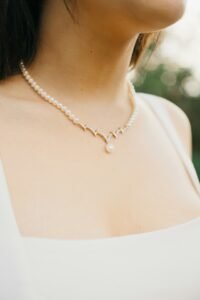
A short strand draws a more continuous line around the neck and is most visible above a crewneck or with an open shirt collar. It can disappear under a high neckline or feel crowded against a buttoned collar. A longer necklace falls onto the shirt instead, making the pearls easier to see over a plain tee, knit, or button-down. Length measurements help narrow the choice, but neck size and shirt neckline determine where a necklace actually lands.
Fit is easiest to judge after a few minutes of normal movement, not just in a mirror. A few small checks can catch annoyances early:
- Clasp: Note whether it stays at the back or repeatedly rotates to the front. A drifting clasp may be noticeable with a short strand.
- Skin: Check where metal, cord, or knots touch the neck. If a spot feels itchy or rubs, a different clasp material or a longer fit may be more comfortable.
- Beard: Turn the head and look down to see whether hair catches at the clasp, knots, or gaps between pearls. Moving the necklace lower can help keep those snag points clear.
Pearl bracelets: size and fit
A bracelet can be as quiet as a single pearl on dark cord or as noticeable as a full strand of large beads. Smaller pearls mixed with chain tend to blend into everyday jewelry; larger pearls catch the eye, especially when the bracelet sits alone on a bare wrist. Cord keeps the look casual, while a metal chain adds shine of its own.
Beside a watch, bead size matters even more. A slim bracelet can sit nearby without competing for attention, but a chunky strand may crowd the watch and knock against it as the wrist moves. Wearing the bracelet on the other wrist is an easy way to give both pieces space.
For fit, a “men’s size” label is less useful than an actual wrist measurement. A flexible tape wrapped snugly around the wrist gives a starting point; the finished bracelet length needs a little extra room for movement, with thicker beads taking up more space on the inside. Adjustable cord or sliding-chain designs offer some leeway when a fixed size feels too tight or slips over the hand.
Pearl rings: a focal point on the hand
A pearl ring draws the eye whenever the hand moves. A single pearl on a plain band can look restrained, while a wide band, engraved metal, or surrounding stones make it more ornate. The setting changes the effect as much as the pearl itself: a lower-set pearl sits closer to the finger, while a raised one stands out more.
Proportion matters in larger sizes. A small pearl can look lost on a broad band, but a larger pearl is not the only answer. A slimmer band or a setting with some space around the pearl can keep the design balanced. Checking photos of the ring on a hand, rather than only against a plain background, makes scale easier to judge.
Rings also take more knocks than necklaces or earrings. An exposed pearl may rub against desks, keys, and door handles, leaving scratches or dull spots over time. For frequent wear, a setting that offers some protection around the pearl can help; taking the ring off for hands-on tasks reduces the chance of a hard hit.
Pearl cufflinks for dress shirts
Pearl cufflinks offer a way to wear pearls only on dress-shirt days. They sit at the wrist rather than against the skin, and a small accent can add detail without becoming the focus of an outfit. They need French cuffs or convertible cuffs with holes for cufflinks; ordinary button cuffs will not hold them.
A pair with real pearls has the subtle differences in shape and surface that come with natural material. Glass or resin pearl-look accents can give a smoother, more uniform appearance. Neither is automatically the better choice: the finish, setting, and how often the cufflinks will be worn matter more than the label alone. Mother-of-pearl is another option, but it is shell lining rather than a whole pearl.
For a first pair, a simple metal setting is easy to match with a watch or belt buckle. Anyone seeking genuine pearls can use a guide to buying real pearl cufflinks to check material descriptions before ordering.
How pearls change with an outfit
Pearls take on a different character depending on what surrounds them. A small bead against a heavy cotton tee can look like a quiet detail; the same bead against silk may feel more polished. Bead size, necklace length, metal, and fabric all shift the impression.
- Casual basics: A single pearl on a silver chain adds a point of light to a plain tee and jeans. Keeping the chain visible above the neckline makes the detail look deliberate without making it the center of the outfit.
- Tailoring: Small pearls or a short strand sit neatly beside a shirt collar and jacket lapels. White pearls bring contrast to dark wool, while cream pearls and gold-toned metal soften the effect with a tan or brown suit.
- Streetwear: Larger beads can hold their own against an oversized hoodie or substantial jacket. A longer strand worn over the fabric stays visible, whereas a finer chain may disappear among folds and zippers.
- Expressive clothes: Mixed bead sizes, colored pearls, or a pearl paired with chunky metal can complement printed shirts and textured layers. Leaving some space between the necklace and a busy collar helps each detail register.
For someone wondering whether a necklace will look feminine, there is no fixed answer—and femininity is not a styling mistake. The way a pearl necklace comes across depends as much on the whole outfit as on the pearl itself. Changing one element, such as chain weight or shirt fabric, can make a familiar piece feel entirely different.
When the setting matters
Personal taste can settle whether a pearl necklace feels right with an outfit. It cannot, by itself, answer whether the piece suits a particular workplace, workout, or religious practice.
At work, the useful question is how people dress in that office, not whether men can wear pearls in general. A small stud or pearl cufflinks may blend into a formal setting, while a visible strand may feel ordinary in a more relaxed one. Observing colleagues’ accessories can offer a better guide than a blanket rule.
During exercise, sweat is only part of the issue. A necklace can catch on equipment, a bracelet can interfere with grip, and a pearl ring can take a knock. Taking jewelry off before a workout is a practical way to avoid those problems.
For religious practice, styling advice is no substitute for guidance within the relevant tradition. Views may depend on the type of jewelry and the interpretation followed; someone with a specific question can consult a knowledgeable, trusted source in their community.
-
Begin with the clothes
A necklace works with open collars and plain shirts; a bracelet can add detail without changing the neckline. The item worn most often is a useful starting point.
-
Set the level of visibility
A single pearl or small stud reads as a quiet detail. A full strand, larger beads, or a prominent ring draws more attention, especially against dark, simple clothing.
-
Check fit and hardware
A clasp should be manageable, and a necklace should clear the collar without rubbing. Metal color and bead size also affect whether a piece feels at home beside a watch or chain.
-
Consider what the pearls are
Real pearls are formed by mollusks; imitation pearls are made to resemble them. Either can look good in an outfit, so appearance and construction matter more than treating cost as a style verdict.
-
Think about actual wear
A piece for everyday shirts may get more use than one reserved for formal occasions. Rings and bracelets also meet more surfaces during ordinary activities.
-
Compare a small shortlist
One or two pieces held against clothes already in the wardrobe reveal more than a crowded shopping list. For a necklace shortlist, approachable options worth comparing offer a place to begin.
Let the wardrobe make the call
The best first pearl piece need not make the strongest statement. If it fits comfortably and looks natural with clothes already in rotation, it has a better chance of being worn rather than left in a box.