 The Royal Legacy Behind Saxony’s Most Famous Pearls
 The Royal Legacy Behind Saxony’s Most Famous Pearls
The story of Saxony’s most celebrated pearls reads like a fairy tale. But this isn’t fiction – it’s the remarkable true history of Princess Kunigunde’s legendary jewelry collection.
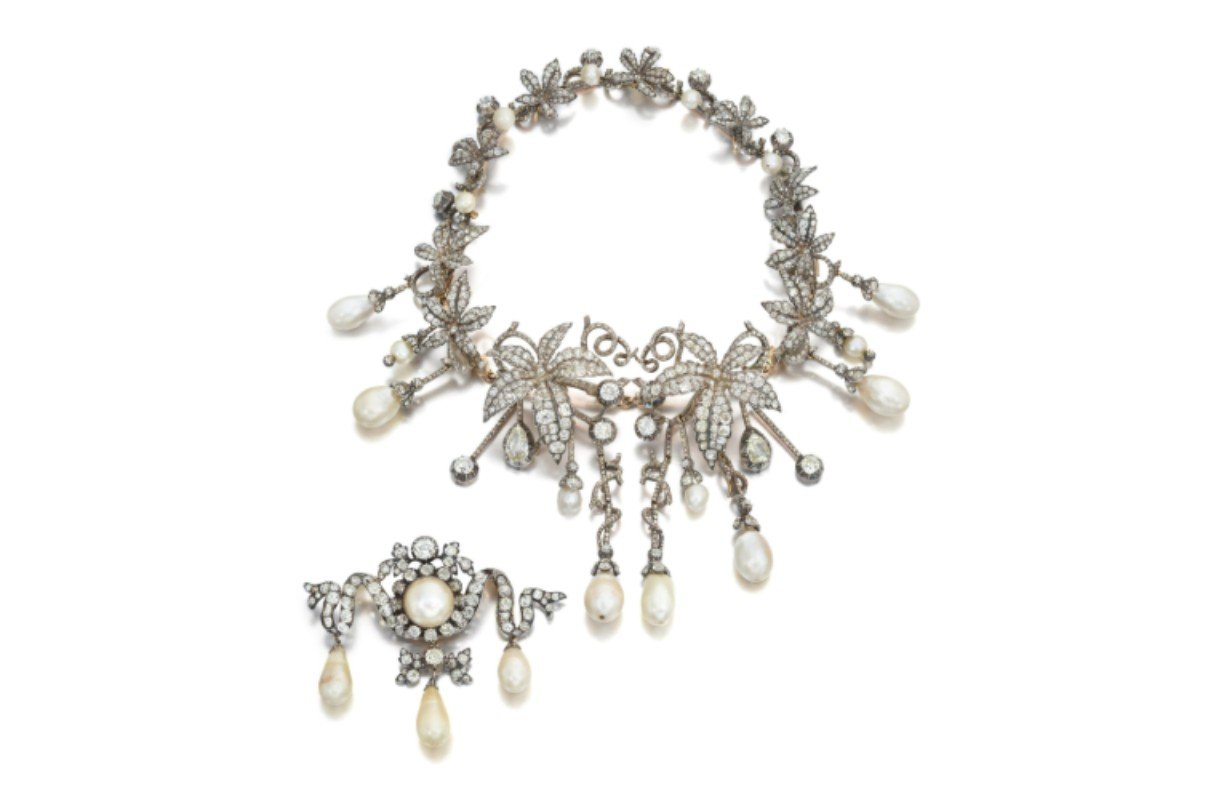
These weren’t just any pearls. They belonged to royalty, traveled across European courts, and survived centuries of political upheaval. The natural pearl and diamond tiara of Princess Kunigunde of Saxony represents one of the most fascinating jewelry stories of the 18th century.
What makes this tale particularly captivating is how a single piece of royal jewelry lived multiple lives, constantly reinventing itself through different eras and owners.
Princess Kunigunde and Her Noble Heritage
Princess Kunigunde of Saxony lived from 1774 to 1828. She held the title of Countess of Lusatia, a prestigious position that reflected her family’s significant influence across European courts.
But Kunigunde’s story wasn’t just about Saxon nobility.
Her life took an interesting turn when she married Giovanni Patrizzi Nero, the 4th Marquess of Montoro, in Rome in 1796. This union connected Saxon and Italian aristocracy, creating a bridge between two powerful European lineages.
The marriage ceremony in Rome was undoubtedly spectacular. Imagine the pearls adorning her on that special day, catching the light in the eternal city’s ancient churches.
From Polish Prince to Italian Marquess
The original commissioner of this stunning tiara was Prince Xavier of Saxony and Poland. His dual title hints at the complex political relationships of 18th-century Europe, where royal families often held territories across multiple kingdoms.
Prince Xavier understood the power of magnificent jewelry. Royal courts used precious gems and pearls as symbols of wealth, political influence, and artistic sophistication.
The fact that he chose natural pearls speaks volumes. In an era before cultured pearls, natural specimens were incredibly rare and valuable. Only the wealthiest nobles could afford such luxurious pieces.
Each pearl had to be discovered, harvested, and carefully selected. The process could take years.
The Original Tiara Design and Its Splendor
The tiara’s original design represented the pinnacle of 18th-century jewelry craftsmanship. Court jewelers of this period created pieces that were both beautiful and symbolically meaningful.
Tiaras weren’t just accessories – they were crowns of sorts, indicating the wearer’s position in the royal hierarchy. Princess Kunigunde’s tiara would have marked her status at formal court events and ceremonial occasions.
The piece likely featured intricate metalwork, carefully arranged pearls, and diamond accents that created stunning visual effects under candlelight.
Natural Pearls Meet Diamond Brilliance
The combination of natural pearls and diamonds wasn’t accidental. These two precious materials complemented each other perfectly, creating a harmony of organic beauty and crystalline fire.
Natural pearls from this era possessed unique characteristics. Each one was slightly different in shape, size, and luster. This irregularity actually added to their charm and value.
The diamonds would have been cut using 18th-century techniques. While not as precise as modern cuts, these older diamonds possessed their own distinctive character and brilliance.
Eighteenth Century Craftsmanship at Its Finest
The artisans who created this tiara were master craftsmen. They belonged to a tradition of European jewelry making that prized both technical skill and artistic vision.
These craftsmen worked without modern tools. Every setting, every detail was created by hand using techniques passed down through generations.
The metalwork alone would have taken weeks to complete.
The Great Transformation Through Time
Perhaps the most fascinating aspect of this jewelry collection is how it transformed over the centuries. Rather than remaining static, the pieces adapted to changing fashions and needs.
This adaptability speaks to the enduring value of quality materials and thoughtful design. Good jewelry doesn’t just survive – it evolves.
From Crown to Necklace
The transition from tiara to necklace represents more than just a style change. It reflects broader shifts in how European society viewed formality and royal protocol.
As social customs became less rigid, jewelry became more wearable and practical. A necklace offered versatility that a tiara simply couldn’t match.
The transformation also allowed the pearls to remain relevant. Instead of sitting in a vault, they could continue to be worn and appreciated.
The Art of the Sévigné-Style Brooch
 The Sévigné-style brooch represents another chapter in this jewelry’s evolution. Named after the famous French letter writer Madame de Sévigné, this style became synonymous with elegant simplicity.
These brooches typically featured a large central stone or pearl surrounded by smaller gems. The design was both striking and wearable, suitable for day or evening occasions.
The choice to create a Sévigné-style piece shows how the jewelry adapted to French fashion influences while maintaining its essential character.
Multiple Lives of Royal Jewelry
This constant reinvention illustrates a key principle of royal jewelry collections. Great pieces don’t just preserve history – they continue to make it.
Each transformation represented new owners, new occasions, and new stories. The pearls witnessed changing fashions, political upheavals, and cultural shifts.
Yet through all these changes, their essential beauty remained constant.
Saxon Court Culture and High Fashion
The Saxon court of the 18th century was a hub of European culture and fashion. Royal families competed to display the most impressive jewelry collections, and craftsmanship standards were extraordinarily high.
Court life revolved around elaborate ceremonies where jewelry played crucial ceremonial roles. Every piece had to meet exacting standards of beauty and craftsmanship.
Polish Royal Connections
The connection to Polish royalty adds another layer to this story. Poland and Saxony shared complex political relationships during this period, often united under the same rulers.
These political connections influenced artistic styles and craftsmanship traditions. Polish and Saxon jewelers shared techniques and aesthetic preferences.
The result was jewelry that reflected the best of both traditions.
European Jewelry Craftsmanship Standards
European jewelry craftsmanship in the 18th century set global standards. Cities like Dresden, Paris, and Rome competed to attract the most skilled artisans.
These craftsmen created pieces that combined technical innovation with artistic excellence. They pushed the boundaries of what was possible with the tools and techniques available.
The Saxony pearls represent this tradition at its finest.
The Auction Block and Modern Discovery
The appearance of these historic pieces at auction marks their transition from private royal collection to public historical artifact. Auctions allow these treasures to find new homes while preserving their stories.
Modern collectors and museums compete for such pieces, recognizing their historical and artistic significance.
Sotheby’s and the Pearl Renaissance
Sotheby’s involvement brings institutional credibility to the story. As one of the world’s premier auction houses, Sotheby’s specializes in historically significant jewelry.
Their expertise helps authenticate pieces and provide proper historical context. This ensures that the stories behind the jewelry are preserved along with the physical objects.
The auction process also generates renewed interest in historical jewelry and craftsmanship traditions.
What Makes These Pearls So Special Today
In today’s world of cultured pearls and synthetic gems, natural pearls from the 18th century possess extraordinary rarity. Their age, provenance, and historical significance make them virtually irreplaceable.
Modern collectors appreciate both their beauty and their stories. Each piece represents a tangible connection to European royal history.
The craftsmanship standards they represent also inspire contemporary jewelers seeking to create lasting works of art.
The Lasting Impact of Royal Jewelry Design
The influence of pieces like Princess Kunigunde’s pearls extends far beyond their original era. They established design principles and quality standards that continue to influence jewelry creation today.
Their story demonstrates how great jewelry transcends fashion trends. True quality and thoughtful design remain relevant across centuries.
The transformation of these pieces also shows how jewelry can adapt while preserving its essential character. This adaptability ensures that historical pieces remain living artifacts rather than museum curiosities.
The Saxon pearl story continues to inspire jewelers, collectors, and history enthusiasts. It reminds us that the finest jewelry tells stories that span generations, connecting us to the artisans, owners, and cultures that created and cherished these magnificent pieces.